Inicio›Diccionario›weak
weak
adjetivoPRONUNCIACIÓN:
¿Cómo se pronuncia weak en inglés correctamente y fácil?
Pronunciación americana para hispanos. Las letras en negrita se pronuncian más fuerte.
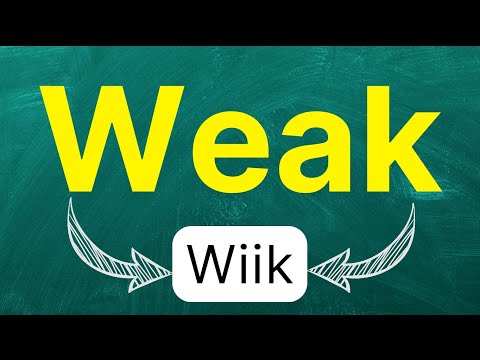
🇺🇸 IPA americano
🇬🇧 IPA británico
DEFINICIÓN:
Traducción y definición de weak. Significados más comunes.
weak como adjetivo
débil, flojo— Que carece de fuerza, poder o resistencia física o mental.Dato curioso
Tiene un homófono perfecto: 'week' (semana). En inglés antiguo, 'weak' significaba 'flexible' o 'bendible', conceptos relacionados con la falta de rigidez.
ORACIONES DE EJEMPLO USANDO
weak:
[¿Es débil su sistema inmunológico?]
Is his immune system weak?
ERRORES COMUNES AL USAR
weak:
He is very weakly.
He is very weak.
Después de 'to be', usamos el adjetivo 'weak', no el adverbio 'weakly'. 'Weakly' se usa con verbos de acción: 'He smiled weakly'.
The weakest student in the class.
The weakest student in the class. / The student who is weakest in the class.
Esta construcción es correcta. El error común es usar 'the weak' como sustantivo cuando se refiere a personas. Usa 'the weak' solo en contextos genéricos (The weak must be protected).
TIPS GRAMATICALES AL USAR
weak:
Como adjetivo, 'weak' se coloca antes del sustantivo (a weak argument) o después del verbo to be (The argument is weak).
Para intensificar, usa 'very weak' o 'extremely weak'. No uses 'too weak' a menos que impliques un problema (Too weak to survive).
"COLLOCATIONS" COMBINACIONES HABITUALES DE
weak:
MODISMOS Y EXPRESIONES IDIOMÁTICAS DE
weak:
"weak point"
punto débil
Math is my weak point.
"weak link"
eslabón débil
He is the weak link in the team.
JUEGOS Y EJERCICIOS INTERACTIVOS USANDO
weak:
PALABRAS RELACIONADAS DE
weak: