Inicio›Diccionario›begin
begin
verboPRONUNCIACIÓN:
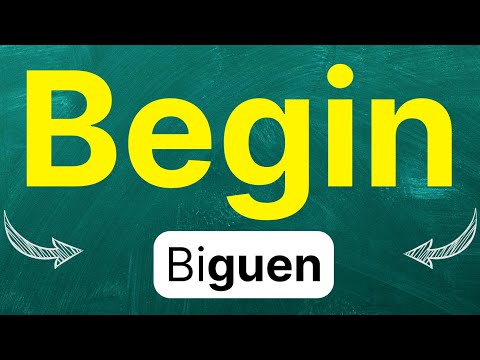
¿Cómo se pronuncia begin en inglés correctamente y fácil?
Pronunciación americana para hispanos. Las letras en negrita se pronuncian más fuerte.
🇺🇸 IPA americano
🇬🇧 IPA británico
DEFINICIÓN:
Traducción y definición de begin. Significados más comunes.
begin como verbo
comenzar, empezar, iniciar— Dar inicio a algo, pasar de no estar haciendo algo a estarlo haciendo.Dato curioso
Es uno de los verbos irregulares más antiguos del inglés, con raíces germánicas. Su pasado 'began' y participio 'begun' muestran la estructura de cambio vocálico de los verbos fuertes.
ORACIONES DE EJEMPLO USANDO
begin:
[¿Comienza la clase a las nueve?]
Does the class begin at nine?
ERRORES COMUNES AL USAR
begin:
I beginned my studies last year
I began my studies last year
'Begin' es irregular. El pasado simple es 'began', no 'beginned'. Los hispanohablantes tienden a aplicar la regla regular (-ed) a todos los verbos.
The project has begin
The project has begun
Con 'have/has', debe usarse el participio pasado 'begun', no la forma base 'begin'.
TIPS GRAMATICALES AL USAR
begin:
Verbo irregular: begin → began → begun. Muchos hispanohablantes lo confunden con la estructura regular (-ed).
Puede ir seguido de infinitivo con 'to' (begin to run) o sustantivo (begin work). Ambas formas son correctas.
"COLLOCATIONS" COMBINACIONES HABITUALES DE
begin:
MODISMOS Y EXPRESIONES IDIOMÁTICAS DE
begin:
"begin with"
empezar por, comenzar con
To begin with, let's review the basics.
PHRASAL VERBS / VERBOS FRASALES USANDO
begin:
begin with
empezar por, comenzar con
Let's begin with the introduction.
JUEGOS Y EJERCICIOS INTERACTIVOS USANDO
begin:
PALABRAS RELACIONADAS DE
begin: