Inicio›Diccionario›protest
protest
verbosustantivoPRONUNCIACIÓN:
¿Cómo se pronuncia protest en inglés correctamente y fácil?
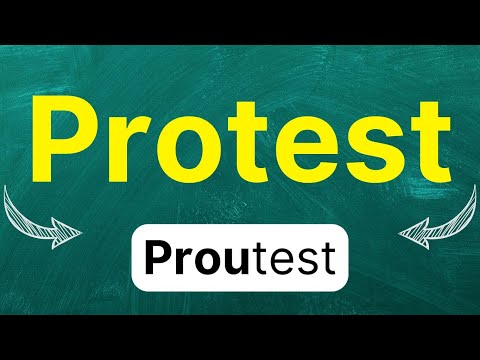
🇺🇸 IPA americano
🇬🇧 IPA británico
DEFINICIÓN:
Traducción y definición de protest. Significados más comunes.
protest como verbo
protestar— Expresar desacuerdo o inconformidad de manera pública o formal contra algoprotest como sustantivo
protesta— expresión de desaprobación o rechazo ante algo, generalmente de forma colectiva y públicaDato curioso
El estrés de pronunciación es crucial: PROtest (sustantivo) vs proTEST (verbo)
ORACIONES DE EJEMPLO USANDO
protest:
[¿Protestas contra las políticas injustas?]
Do you protest against unfair policies?
ERRORES COMUNES AL USAR
protest:
protest como forma verbo
She protested the decision loudly.
She protested against the decision loudly. / She protested the decision strongly.
En inglés, 'protest' como verbo se usa con 'against' o directamente con un objeto, pero 'against' es más común
He will protest to change the law.
He will protest against the law / in order to change the law.
Se usa 'against' para indicar qué se está criticando, no 'to'
protest como forma sustantivo
I made a protest about the rules.
I made a complaint about the rules. / I lodged a protest about the rules.
En inglés coloquial, 'make a protest' es menos común que 'lodge a protest' o 'file a complaint'. 'Make a protest' suena forzado.
The protest of students were very large.
The student protest was very large. / The protests of students were very large.
Cuando se usa 'protest' en singular como sustantivo colectivo, el verbo debe estar en singular. O usar la forma plural 'protests'.
TIPS GRAMATICALES AL USAR
protest:
protest como forma verbo
Como verbo transitivo, 'protest' requiere un objeto: 'protest the decision' o 'protest against injustice'
En inglés americano, se usa más 'protest against', mientras que en británico puede variar
protest como forma sustantivo
El sustantivo 'protest' es contable, por lo que puede usarse en singular o plural: 'a protest', 'two protests'
Cuando va acompañado de preposición, se usa comúnmente 'protest against', 'protest about', 'in protest of', 'under protest'
"COLLOCATIONS" COMBINACIONES HABITUALES DE
protest:
protest como forma verbo
protest como forma sustantivo
SINÓNIMOS Y ANTÓNIMOS DE
protest:
protest como verbo
Sinónimos
Antónimos
protest como sustantivo
Sinónimos
Antónimos
MODISMOS Y EXPRESIONES IDIOMÁTICAS DE
protest:
"protest too much"
Negar algo con tanta insistencia que parece falso o sospechoso
When accused of lying, he protested too much, making everyone suspicious.
"under protest"
algo hecho en contra de la propia voluntad o desaprobación
He signed the document under protest.
"lodge a protest"
presentar formalmente una queja u objeción
The team decided to lodge a protest against the referee's decision.
PHRASAL VERBS / VERBOS FRASALES USANDO
protest:
protest against
Expresar desacuerdo con algo específico
We are protesting against the government's new policy.
JUEGOS Y EJERCICIOS INTERACTIVOS USANDO
protest:
PALABRAS RELACIONADAS DE
protest: