Inicio›Diccionario›dry
dry
adjetivoverboPRONUNCIACIÓN:
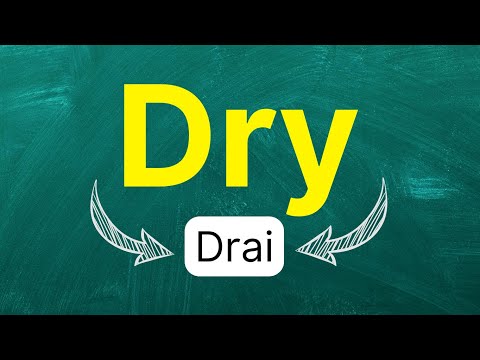
¿Cómo se pronuncia dry en inglés correctamente y fácil?
Pronunciación americana para hispanos. Las letras en negrita se pronuncian más fuerte.
🇺🇸 IPA americano
🇬🇧 IPA británico
DEFINICIÓN:
Traducción y definición de dry. Significados más comunes.
dry como adjetivo
seco— que carece de humedad o líquido; que no tiene agua o no está mojadodry como verbo
secar— quitar o eliminar la humedad de algo; hacer que algo pierda el contenido de aguaDato curioso
La palabra 'dry' tiene raíces germánicas antiguas y ha mantenido su pronunciación y significado durante más de mil años en inglés
ORACIONES DE EJEMPLO USANDO
dry:
[¿Es el clima seco hoy?]
Is the weather dry today?
ERRORES COMUNES AL USAR
dry:
dry como forma adjetivo
The ground is very dryness.
The ground is very dry.
'Dry' es un adjetivo; 'dryness' es el sustantivo. Después de 'is' va el adjetivo, no el sustantivo
She has dry hairs.
She has dry hair.
'Hair' es incontable en este contexto; se usa sin plural
dry como forma verbo
I dryed my clothes.
I dried my clothes.
El pasado simple se forma añadiendo '-ed' a 'dry', pero como termina en 'y' precedida de consonante, cambia a 'ied': dry → dried
She is drying up the dishes.
She is drying the dishes.
'Dry up' significa agotarse o desaparecer; para 'secar platos' solo usa 'dry', no 'dry up'
TIPS GRAMATICALES AL USAR
dry:
dry como forma adjetivo
Como adjetivo, 'dry' va después de verbos de estado como 'be' (is, are, was, were) o antes del sustantivo: 'The ground is dry' o 'dry ground'
Para expresar gradualidad, combina con adverbios: 'very dry', 'quite dry', 'extremely dry'
dry como forma verbo
El verbo 'dry' es regular: dry → dried → dried
En tercera persona singular presente, añade 's': he/she dries
"COLLOCATIONS" COMBINACIONES HABITUALES DE
dry:
dry como forma adjetivo
dry como forma verbo
SINÓNIMOS Y ANTÓNIMOS DE
dry:
MODISMOS Y EXPRESIONES IDIOMÁTICAS DE
dry:
"dry as a bone"
extremadamente seco, sin nada de humedad
After the drought, the fields were dry as a bone.
"dry sense of humor"
humor sutil e irónico, sin expresiones exageradas
He has a dry sense of humor that people don't always understand.
"keep one's powder dry"
mantenerse preparado y listo para actuar cuando sea necesario
The team kept their powder dry until the final match.
"dry up"
agotarse, desaparecer o dejar de hablar
The river dried up during the drought.
"dry out"
secar completamente; hacer que pierda toda la humedad
Leave the wood to dry out for several weeks.
PHRASAL VERBS / VERBOS FRASALES USANDO
dry:
dry up
secarse, agotarse; desaparecer
The well dried up after the hot summer.
dry out
secar completamente; deshidratarse
The fruits will dry out if you leave them in the sun too long.
dry off
secarse rápidamente; secar algo superficialmente
Let me dry off before I sit on the couch.
JUEGOS Y EJERCICIOS INTERACTIVOS USANDO
dry: