Inicio›Diccionario›lumber
lumber
sustantivoverboPRONUNCIACIÓN:
¿Cómo se pronuncia lumber en inglés correctamente y fácil?
Pronunciación americana para hispanos. Las letras en negrita se pronuncian más fuerte.
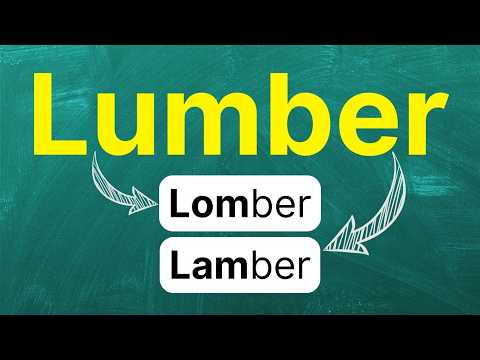
🇺🇸 IPA americano
🇬🇧 IPA británico
DEFINICIÓN:
Traducción y definición de lumber. Significados más comunes.
lumber como sustantivo
madera, tablones, leña— madera aserrada o troncos de árbol cortados para usar en construcción o como combustiblelumber como verbo
moverse pesadamente, avanzar torpemente— moverse de manera lenta y pesada, generalmente haciendo ruido; avanzar con dificultad o torpezaDato curioso
La palabra 'lumber' tiene raíces en el término lombardo 'lombard' (prestamista), porque los comerciantes de madera del Renacimiento italiano eran conocidos como lombardos
ORACIONES DE EJEMPLO USANDO
lumber:
[¿Necesitas madera para tu proyecto de construcción?]
Do you need lumber for your construction project?
ERRORES COMUNES AL USAR
lumber:
lumber como forma sustantivo
I need lumbers for my project.
I need lumber for my project.
Lumber es incontable cuando se refiere al material en general, no se pluraliza
The lumber are expensive.
The lumber is expensive.
Lumber como sustantivo incontable va con verbo singular (is, not are)
lumber como forma verbo
He lumber down the stairs.
He lumbers down the stairs.
En tercera persona singular presente, se debe añadir -s al verbo
She is lumber through the city.
She is lumbering through the city.
Con el verbo 'to be' se usa el presente participle -ing, no el infinitivo
TIPS GRAMATICALES AL USAR
lumber:
lumber como forma sustantivo
Lumber es un sustantivo incontable en su sentido colectivo (all the lumber), pero puede usarse en plural (lumbers) cuando se refiere a diferentes tipos de madera
Como sustantivo, se usa con artículos 'the' o 'a/an' según corresponda: 'the lumber' (la madera), 'some lumber' (algo de madera)
lumber como forma verbo
Lumber es un verbo regular, por lo que el pasado simple y participio pasado se forman añadiendo -ed: lumbered, lumbered
Se usa frecuentemente con preposiciones de movimiento como 'along', 'through', 'into', 'down' para describir la dirección del movimiento pesado
"COLLOCATIONS" COMBINACIONES HABITUALES DE
lumber:
lumber como forma sustantivo
lumber como forma verbo
SINÓNIMOS Y ANTÓNIMOS DE
lumber:
MODISMOS Y EXPRESIONES IDIOMÁTICAS DE
lumber:
"lumber up"
llenar algo innecesariamente con objetos
Don't lumber up your garage with broken furniture.
"lumber along"
avanzar lentamente de manera torpe
The heavy vehicle lumbered along the mountain road.
"lumber around"
moverse de un lugar a otro de manera pesada y sin propósito
The bear lumbered around the campsite looking for food.
PHRASAL VERBS / VERBOS FRASALES USANDO
lumber:
lumber around
moverse de un lado a otro lentamente sin dirección clara
The hippopotamus lumbered around the watering hole.
lumber along
continuar moviéndose de manera lenta y pesada
Despite his age, he lumbered along the trail.
lumber up
moverse torpemente hacia arriba
The old truck lumbered up the steep hill.
JUEGOS Y EJERCICIOS INTERACTIVOS USANDO
lumber: