Inicio›Diccionario›angle
angle
sustantivoverboPRONUNCIACIÓN:
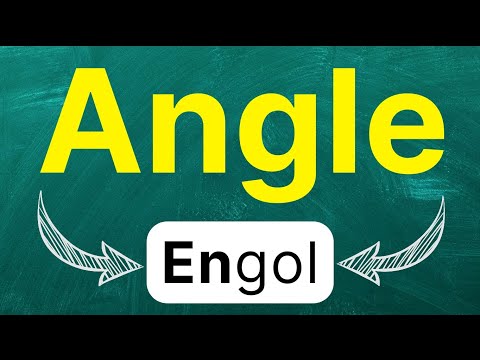
¿Cómo se pronuncia angle en inglés correctamente y fácil?
Pronunciación americana para hispanos. Las letras en negrita se pronuncian más fuerte.
🇺🇸 IPA americano
🇬🇧 IPA británico
DEFINICIÓN:
Traducción y definición de angle. Significados más comunes.
angle como sustantivo
ángulo— Figura geométrica formada por dos líneas que se encuentran en un punto, o la dirección o perspectiva desde la que se observa algoangle como verbo
inclinar, sesgar, dirigir hacia un lado— inclinar o dirigir algo hacia una dirección específica; presentar información desde una perspectiva particularDato curioso
La palabra 'angle' proviene del latín 'angulus' y del proto-indoeuropeo 'h₂enǵ-' que significa 'estrecho' o 'apretado'. En geometría, los ángulos se miden en grados, radianes o gradianes.
ORACIONES DE EJEMPLO USANDO
angle:
[¿Qué ángulo tiene este triángulo?]
What angle does this triangle have?
ERRORES COMUNES AL USAR
angle:
angle como forma sustantivo
I don't understand the angels of this geometry.
I don't understand the angles of this geometry.
Confundir 'angles' (ángulos) con 'angels' (ángeles). Se escriben diferente.
This angle is very sharpness.
This angle is very sharp.
'Sharp' es un adjetivo, no 'sharpness' (que es un sustantivo abstracto).
angle como forma verbo
She angled the camera the window.
She angled the camera toward the window.
Después de 'angle', se necesita una preposición como 'toward', 'at' o 'to' para indicar dirección.
They will angle for a better deal without saying nothing.
They will angle for a better deal without saying anything.
Doble negativo incorrecto. En inglés estándar, no se usa 'nothing' después de una negación.
TIPS GRAMATICALES AL USAR
angle:
angle como forma sustantivo
Como sustantivo contable, 'angle' tiene plural regular: angles.
Se utiliza con artículos (a, an, the): 'a right angle', 'the angle'.
angle como forma verbo
Como verbo transitivo, 'angle' requiere un objeto directo: 'She angled the mirror' (Ella inclinó el espejo).
En la expresión 'angle for', el verbo es seguido por una preposición y funciona como verbo intransitivo: 'He's angling for a promotion'.
"COLLOCATIONS" COMBINACIONES HABITUALES DE
angle:
angle como forma sustantivo
angle como forma verbo
SINÓNIMOS Y ANTÓNIMOS DE
angle:
MODISMOS Y EXPRESIONES IDIOMÁTICAS DE
angle:
"angle for something"
buscar obtener algo indirectamente o con astucia
He was angling for a promotion at work.
"from every angle"
desde todos los puntos de vista o perspectivas
We examined the problem from every angle.
"right angle"
ángulo de 90 grados
The corner of the room forms a right angle.
PHRASAL VERBS / VERBOS FRASALES USANDO
angle:
angle for
buscar u obtener algo de manera indirecta
She is angling for a better position.
angle toward
dirigir o inclinar algo hacia una dirección o propósito específico
The company angled toward sustainability in their new campaign.
JUEGOS Y EJERCICIOS INTERACTIVOS USANDO
angle:
PALABRAS RELACIONADAS DE
angle: