Inicio›Diccionario›break
break
verbosustantivoPRONUNCIACIÓN:
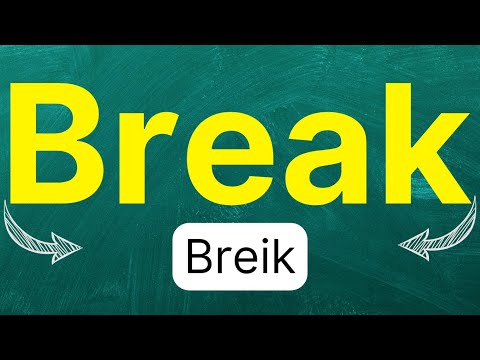
¿Cómo se pronuncia break en inglés correctamente y fácil?
Pronunciación americana para hispanos. Las letras en negrita se pronuncian más fuerte.
🇺🇸 IPA americano
🇬🇧 IPA británico
DEFINICIÓN:
Traducción y definición de break. Significados más comunes.
break como verbo
romper, quebrantar, interrumpir— separar algo en pedazos; hacer que algo deje de funcionar; interrumpir una continuidad o una reglabreak como sustantivo
descanso, pausa, receso— período de tiempo durante el cual se interrumpe una actividad para descansar o recuperarseDato curioso
Break es uno de los verbos irregulares más antiguos del inglés, con raíces en el germánico antiguo. Su pasado 'broke' y participio 'broken' son completamente irregulares.
ORACIONES DE EJEMPLO USANDO
break:
[¿Siempre rompe sus promesas?]
Does he always break his promises?
ERRORES COMUNES AL USAR
break:
break como forma verbo
I breaked the window.
I broke the window.
Break es irregular; el pasado simple es 'broke', no 'breaked'
The cup is break.
The cup is broken. / The cup breaks easily.
Con 'is' se usa el participio pasado (broken) para estado o presente continuo (is breaking) para acción
break como forma sustantivo
I need a break of work.
I need a break from work.
La preposición correcta es 'from' (descanso de algo), no 'of'.
Can I take a break? Yes, you can take a break.
Can I take a break? Yes, you can.
Se puede responder con simplemente 'Yes, you can' sin repetir 'take a break' innecesariamente.
TIPS GRAMATICALES AL USAR
break:
break como forma verbo
Break es un verbo irregular: break (presente) → broke (pasado) → broken (participio pasado)
En tercera persona singular presente se agrega -s: he/she/it breaks
break como forma sustantivo
El sustantivo 'break' es contable, por lo que se puede usar en singular o plural: 'a break' (un descanso), 'breaks' (descansos).
Se puede usar con artículos indefinidos (a break) o definidos (the break).
"COLLOCATIONS" COMBINACIONES HABITUALES DE
break:
break como forma verbo
break como forma sustantivo
SINÓNIMOS Y ANTÓNIMOS DE
break:
MODISMOS Y EXPRESIONES IDIOMÁTICAS DE
break:
"break the ice"
romper el hielo; iniciar una conversación en una situación incómoda
Let me break the ice and introduce myself.
"break the bank"
gastar mucho dinero; arruinarse
Those vacation plans would break the bank.
"break new ground"
innovar; hacer algo por primera vez
This research breaks new ground in medicine.
"break someone's heart"
partir el corazón a alguien; causar dolor emocional
I didn't want to break her heart.
"give someone a break"
darle una oportunidad a alguien o dejar de criticar
Give him a break, he's doing his best.
"lucky break"
oportunidad afortunada o golpe de suerte
Getting that job was a lucky break for her.
"take a break"
pausar una actividad para descansar
Let's take a break and have some coffee.
"break of dawn"
al amanecer, al despuntar el día
We left at break of dawn.
PHRASAL VERBS / VERBOS FRASALES USANDO
break:
break down
averiarse; descomponerse; llorar; analizar
The car broke down on the highway.
break up
separarse; terminar una relación; disolver
They broke up after five years together.
break out
escapar; estallar; brotar
A fire broke out in the building.
break in
irrumpir; robar entrando; domesticar
I need to break in my new shoes.
break through
abrirse paso; lograr un avance
Scientists finally broke through in their research.
break into (como sustantivo: a break into)
entrada forzada o penetración
The break into the system was investigated.
JUEGOS Y EJERCICIOS INTERACTIVOS USANDO
break:
PALABRAS RELACIONADAS DE
break: