Inicio›Diccionario›die
die
verbosustantivoPRONUNCIACIÓN:
¿Cómo se pronuncia die en inglés correctamente y fácil?
Pronunciación americana para hispanos. Las letras en negrita se pronuncian más fuerte.
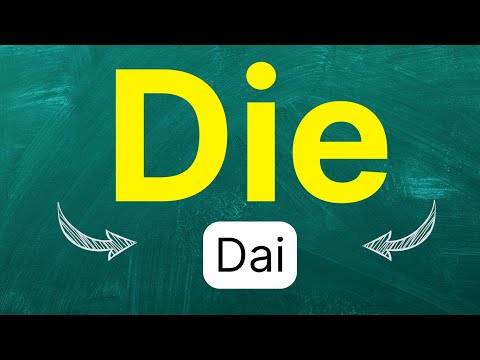
🇺🇸 IPA americano
🇬🇧 IPA británico
DEFINICIÓN:
Traducción y definición de die. Significados más comunes.
die como verbo
morir— dejar de vivir, perder la vida, cesar de existirdie como sustantivo
dado— Cubo pequeño con puntos o números en sus caras, utilizado en juegos de azar o de mesaDato curioso
El verbo 'die' es irregular: die → died → died. Es uno de los verbos más antiguos del inglés, con raíces germánicas
ORACIONES DE EJEMPLO USANDO
die:
[¿Mueren las flores sin agua?]
Do flowers die without water?
ERRORES COMUNES AL USAR
die:
die como forma verbo
He dieed yesterday.
He died yesterday.
Die es irregular. No se forma con -ed doble. La forma pasada es 'died'
She is dieing from hunger.
She is dying from hunger.
En gerundio se elimina la -e muda pero se mantiene la -y: dying, no dieing
die como forma sustantivo
I need a dies for the game.
I need a die for the game.
El singular es 'die', no 'dies'. Se usa 'dies' solo en contextos históricos especializados
The die are on the table.
The die is on the table.
Un dado singular requiere verbo en singular. Si fueran varios, sería 'The dice are on the table'
TIPS GRAMATICALES AL USAR
die:
die como forma verbo
Die es un verbo irregular: die-died-died. No se forma con -ed simple como verbos regulares
En Presente Continuo se usa 'dying': The patient is dying. (El paciente se está muriendo)
die como forma sustantivo
El plural de 'die' (sustantivo) es 'dice', aunque en contextos formales o históricos se puede ver 'dies'
Como sustantivo contable, debe ir con artículos: 'a die', 'the die'
"COLLOCATIONS" COMBINACIONES HABITUALES DE
die:
die como forma verbo
die como forma sustantivo
SINÓNIMOS Y ANTÓNIMOS DE
die:
MODISMOS Y EXPRESIONES IDIOMÁTICAS DE
die:
"die hard"
resistirse obstinadamente, cambiar de opinión con dificultad
Old habits die hard.
"die laughing"
reírse mucho, morirse de risa
I died laughing at that joke.
"die of curiosity"
tener mucha curiosidad, estar ansioso por saber
I'm dying of curiosity to know what's in the box.
"never say die"
nunca rendirse, mantener la esperanza
We'll never say die; we can still win.
"the die is cast"
la suerte está echada, la decisión está tomada y no puede cambiarse
Once you signed the contract, the die was cast.
"roll the die"
dejar algo al azar, intentar algo sin certeza del resultado
We decided to roll the die and start the new business.
PHRASAL VERBS / VERBOS FRASALES USANDO
die:
die down
disminuir gradualmente, extinguirse
The noise finally died down after midnight.
die out
desaparecer, extinguirse completamente
The species will die out if we don't protect them.
die off
morir gradualmente uno tras otro
The plants died off during the drought.
die away
desvanecerse, desaparecer gradualmente
The music died away in the distance.
JUEGOS Y EJERCICIOS INTERACTIVOS USANDO
die: