Inicio›Diccionario›even
even
adverbioadjetivoverboPRONUNCIACIÓN:
¿Cómo se pronuncia even en inglés correctamente y fácil?
Pronunciación americana para hispanos. Las letras en negrita se pronuncian más fuerte.
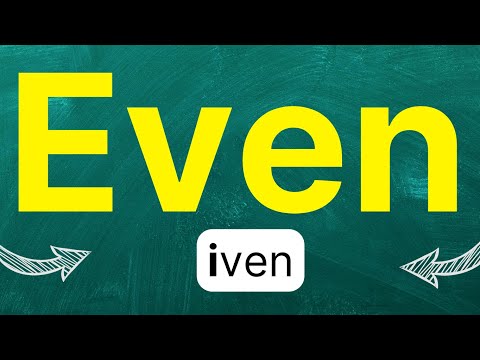
🇺🇸 IPA americano
🇬🇧 IPA británico
DEFINICIÓN:
Traducción y definición de even. Significados más comunes.
even como adverbio
incluso, ni siquiera, hasta, aún— Adverbio usado para enfatizar o intensificar una idea, indicando algo sorprendente o inesperado; también se usa para indicar que algo ocurre en grado aún mayoreven como adjetivo
parejo, liso, uniforme, igual, equitativo— que tiene una superficie lisa y plana sin irregularidades; que es igual en cantidad, tamaño o distribución; que está equilibrado o en igualdad de condicioneseven como verbo
emparejar, igualar, nivelar— hacer que algo sea igual, equilibrado o plano; poner al mismo nivelDato curioso
En inglés antiguo, 'even' derivaba de 'efen' que significaba 'liso o llano'. Su uso como adverbio intensificador es muy común en expresiones para añadir énfasis dramático a las afirmaciones.
ORACIONES DE EJEMPLO USANDO
even:
[¿Acaso le gusta siquiera el chocolate?]
Does she even like chocolate?
ERRORES COMUNES AL USAR
even:
even como forma adverbio
Even I don't know even where is the bathroom.
Even I don't know where the bathroom is.
No se debe repetir 'even' innecesariamente en la misma oración. Además, 'where is' debe ser 'where the bathroom is' en reported speech.
He even not came to the party.
He didn't even come to the party.
'Even' debe ir después del auxiliar negativo (didn't), no antes del verbo principal en construcciones negativas.
even como forma adjetivo
The surface even is smooth.
The surface is even and smooth.
El adjetivo 'even' debe ir después del verbo to be, no antes del sustantivo cuando está en posición predicativa.
I want even odds for fair competition.
I want even odds for fair competition. ✓
Esta frase es correcta; 'even' como adjetivo modifica 'odds'.
even como forma verbo
He evens the accounts without checking them.
He evens up the accounts without checking them.
Es más natural usar 'even up' cuando se refiere a igualar cuentas o balances
The prices was evened last month.
The prices were evened last month.
Concordancia de verbo: 'prices' es plural, requiere 'were', no 'was'
TIPS GRAMATICALES AL USAR
even:
even como forma adverbio
El adverbio 'even' generalmente se coloca antes del verbo principal o del elemento que se desea enfatizar.
Cuando 'even' precede un sustantivo, este se enfatiza especialmente: 'Even children can understand this' (Incluso los niños pueden entender esto).
even como forma adjetivo
Como adjetivo, 'even' se coloca antes del sustantivo (even surface, even distribution) o después del verbo to be (The surface is even).
No confundas el adjetivo 'even' con el adverbio 'even' que significa 'incluso'. En contextos predicativos con verbos de estado como 'be', 'seem', 'look', 'even' funciona como adjetivo: 'The table looks even'.
even como forma verbo
Como verbo transitivo, 'even' requiere un objeto directo: even the score, even the distribution
En phrasal verbs, 'even out' y 'even up' pueden ser transitivos o intransitivos
"COLLOCATIONS" COMBINACIONES HABITUALES DE
even:
even como forma adverbio
even como forma adjetivo
even como forma verbo
SINÓNIMOS Y ANTÓNIMOS DE
even:
MODISMOS Y EXPRESIONES IDIOMÁTICAS DE
even:
"even so"
aun así, sin embargo, a pesar de todo
The plan was difficult, but even so, we decided to proceed.
"even if"
aunque, aun si
Even if you don't believe me, it's the truth.
"even though"
aunque, pese a que
Even though it was raining, we went out.
"get even"
vengarse, desquitarse (aunque aquí 'get' es verbo, 'even' funciona como adjetivo predicativo)
They want to get even with their rivals.
"even playing field"
condiciones equitativas, igualdad de oportunidades
We need an even playing field for fair competition.
"even the score"
vengarse, devolver lo que alguien te hizo
I want to even the score with him for what he did to me.
"even the odds"
hacer que las probabilidades sean equitativas
The new equipment will even the odds between the two teams.
PHRASAL VERBS / VERBOS FRASALES USANDO
even:
even out
nivelar, equilibrar, llegar a ser igual
The temperature will even out as we move towards spring.
even up
igualar, hacer justo
Let's even up the teams so the game is fair.
JUEGOS Y EJERCICIOS INTERACTIVOS USANDO
even: